
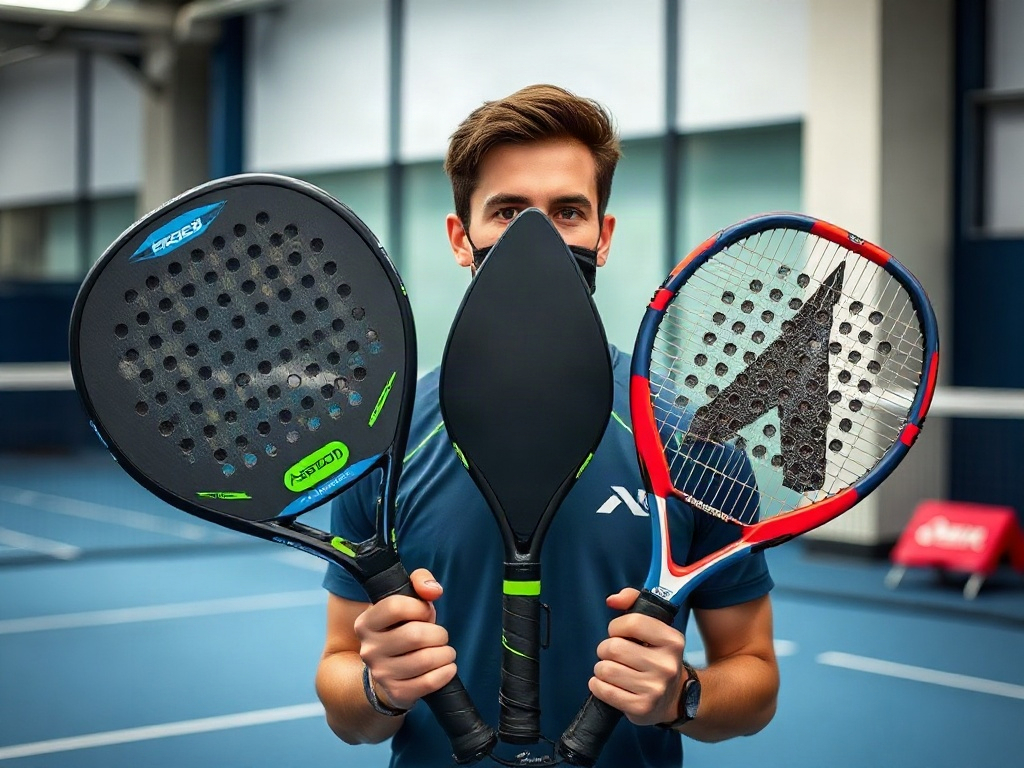
Choosing a padel racket is not just about brand, weight, or color, because shape quietly shapes the way you think, move, and attack on court. A racket can make your shots feel naturally controlled, effortlessly balanced, or explosively powerful, and that difference often comes down to the head design. For many players, the decision between round, teardrop, and diamond is where comfort meets ambition. If you are trying to improve faster, win more points, or simply enjoy your matches with less frustration, the shape you pick matters more than most people realize. The right frame can support your timing, reduce mishits, and make your strengths feel more repeatable. The wrong one can force you to fight your own equipment on every rally.
Round rackets usually reward precision and stability, teardrop rackets aim for a versatile middle ground, and diamond rackets push aggressively toward power. Each shape has a different sweet spot, balance point, and response at impact, which means they favor different playing styles and skill levels. A beginner who wants clean contact may feel immediately at home with a round racket, while a confident attacker may prefer the extra punch of a diamond model. Somewhere in between, the teardrop shape remains one of the most popular choices because it blends control and offense without pushing too far in either direction. Understanding these differences helps you choose a racket that complements your game instead of reshaping it. That is the real goal: finding equipment that feels like an extension of your style, not a compromise.
What Padel Racket Shape Actually Changes
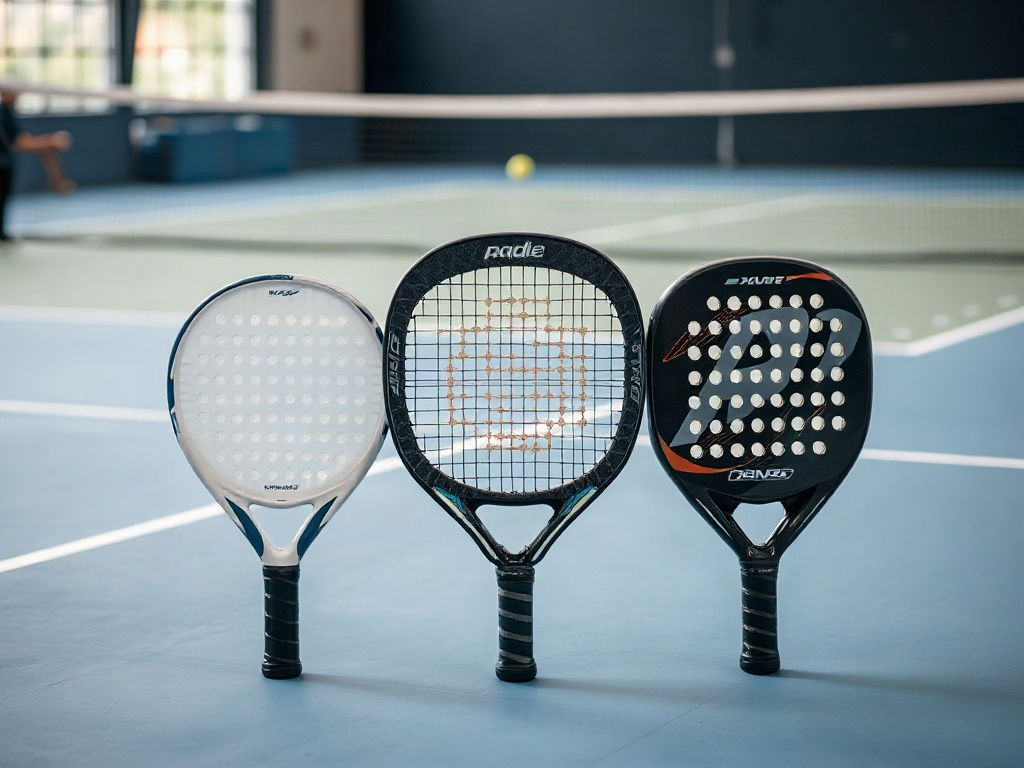
Racket shape affects more than appearance, because it influences how your shots behave before the ball even leaves the strings. A round shape typically places the sweet spot lower and wider, which creates more forgiveness and better control on defensive shots. Teardrop rackets move that sweet spot slightly upward, giving you a more balanced feel when switching between soft touches and aggressive finishing shots. Diamond rackets shift the balance higher still, which can generate more leverage and power when you hit cleanly. These differences also change how quickly the racket moves through the air, especially during volleys and recovery swings. In other words, shape is not a cosmetic feature; it is a performance decision.
Balance and sweet spot are especially important because they determine how much help the racket gives you when contact is not perfect. A larger sweet spot generally makes the racket more forgiving, which is why many players feel calmer with round models in pressure situations. Higher balance can make a racket feel stronger in the attacking zone, but it can also demand better technique and timing. That is why shape should always be evaluated together with skill level, playing frequency, and preferred position on court. A player who lives near the net and finishes points aggressively may want a different response than someone who builds rallies patiently from the back. Your ideal racket is the one that matches how you actually play, not how you imagine your game should look.
Round Padel Rackets
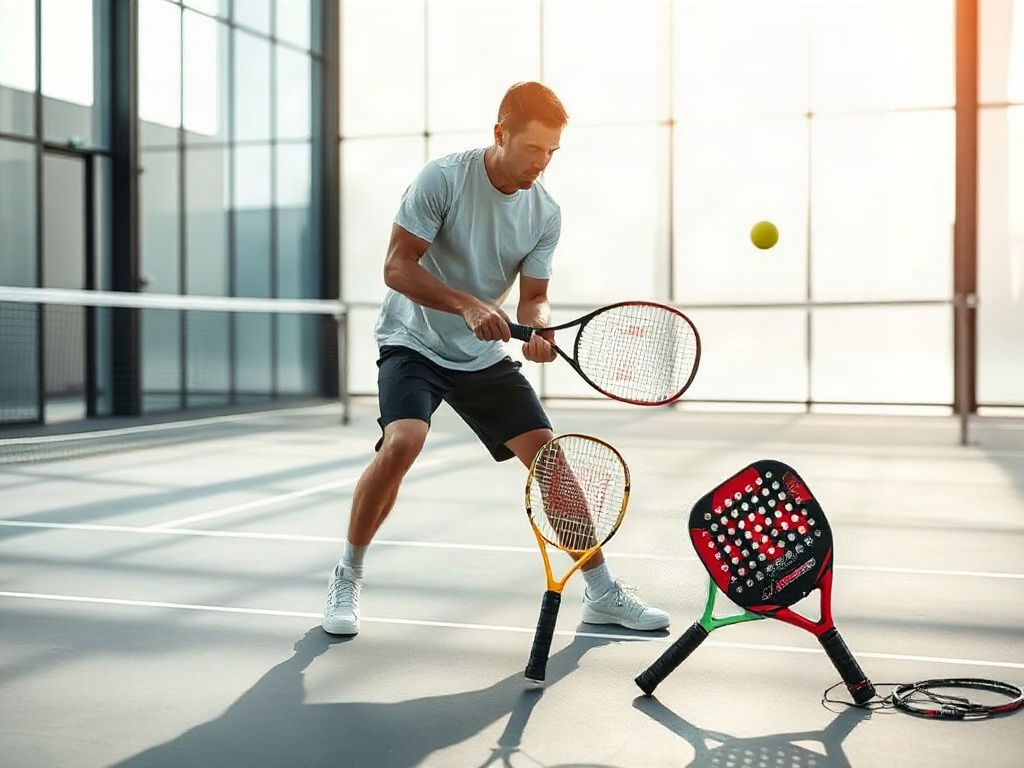
Round padel rackets are designed with control first, and that design philosophy shows up in nearly every rally. The head shape spreads the hitting area in a way that makes off-center contact less punishing, which is a major advantage for players still refining technique. Because the balance point is usually lower, the racket often feels easier to maneuver, especially when reacting quickly at the net or defending under pressure. This shape tends to encourage consistency over risk, which can help you build confidence point by point. Many beginners find round rackets intuitive because the feedback is cleaner and the margin for error is wider. For players who value placement, defense, and precision, this is usually the safest place to start.
Round rackets are also a smart choice for players who want to work on fundamentals without constantly fighting inconsistency. They can make lobs, blocks, and controlled bandejas easier to manage because the racket stays stable through contact. At the same time, they are not only for beginners, since many experienced players prefer the feeling of reliability they provide in fast exchanges. The trade-off is that you may sacrifice some attacking power compared with more offensive shapes. Still, if your game is based on constructing points carefully, that trade-off often makes sense. The best round rackets do not feel passive; they feel composed, reliable, and accurate under pressure.
- They usually have a larger sweet spot, which helps reduce mishits.
- They offer strong control for defensive and placement-based play.
- They are typically easier to handle during fast rallies and reflex volleys.
- They suit players who prioritize consistency over raw attacking force.
- They can help newer players build confidence more quickly on court.
Teardrop Padel Rackets
Teardrop rackets are often described as the middle path, but that description only tells part of the story. Their shape creates a balance between control and power by placing the sweet spot slightly higher than a round racket without pushing it as far as a diamond model. That makes them appealing to players who want versatility, because they can defend, transition, and attack without feeling locked into one mode. The result is a racket that behaves well in almost every part of the court. Many intermediate and advanced players prefer this shape because it supports an all-court game. If you want one racket that can keep up with a changing rally, the teardrop shape is usually the most adaptable option.
This shape is especially popular among players who do not want to choose between touch and offense. It provides enough help on softer shots to remain manageable, yet still delivers a noticeable boost when you swing with intent. That flexibility is valuable if your style changes depending on the opponent, the scoreline, or your position in the match. Teardrop rackets often feel lively without becoming overly demanding, which is why so many competitive players treat them as a practical default. They can work well for those still improving technique, as long as the racket is not too stiff or too head-heavy. For many people, the teardrop shape is where performance begins to feel truly complete.
- They combine a manageable feel with stronger attacking potential.
- They offer a well-placed sweet spot for both defense and offense.
- They suit players who like to adapt their strategy during matches.
- They are often a strong choice for intermediate players moving upward.
- They can feel more dynamic than round rackets without being as demanding as diamond models.
| Shape | Main Strength | Sweet Spot | Best For |
|---|---|---|---|
| Round | Control and forgiveness | Large and low | Beginners, defensive players, consistency-focused players |
| Teardrop | Balanced all-around performance | Moderate and slightly higher | Intermediate players, versatile all-court styles |
| Diamond | Power and attacking output | Smaller and higher | Advanced players, aggressive net players, smasher-focused styles |
Diamond Padel Rackets
Diamond padel rackets are built for players who want to hit harder and finish points more decisively. Their higher balance and more compact sweet spot create a design that prioritizes explosive shot-making, especially on smashes, volleys, and aggressive overheads. When you connect cleanly, a diamond racket can feel incredibly rewarding because it transfers energy efficiently and helps your attacking game stand out. However, that extra power usually comes with less forgiveness, so the racket expects cleaner timing and better technique. For players with strong mechanics, this can be a major advantage rather than a drawback. The shape is not trying to help you play safely; it is trying to help you dominate when you are already in control of the point.
Because diamond rackets are less forgiving, they are often best suited to advanced players who already know how to manage their swing and handle faster play. They are popular with aggressive competitors who spend more time at the net, seek finishing shots, and want to pressure opponents constantly. If you rely on precision rather than pace, this shape may feel too demanding or unstable in certain defensive situations. But if your natural game is built around attack, the diamond format can amplify your strengths in a very visible way. The feel is usually sharper, livelier, and more force-oriented than the other two shapes. In the right hands, that can be a serious weapon.
- You already have solid technique and consistent contact.
- You want extra power for smashes and attacking overheads.
- You like to play aggressively near the net.
- You are comfortable trading forgiveness for offensive output.
- You want a racket that rewards precision and confidence under pressure.
Round vs Teardrop vs Diamond: Side-by-Side Comparison
When comparing these shapes directly, the differences become easier to understand in practical terms. Round rackets give you the most control and forgiveness, which is why they are often the most comfortable option for newer players or defensive specialists. Teardrop rackets sit in the middle, delivering a balanced mix that works well across many situations without leaning too heavily in one direction. Diamond rackets offer the strongest power potential, but they ask more from your technique and decision-making. If your game is still developing, control may matter more than outright force. If your game is already mature, power may become the deciding factor.
Think of the three shapes as different answers to the same question: what do you want your racket to do when the rally gets difficult? A round racket says, “help me stay accurate,” a teardrop racket says, “let me do a bit of everything,” and a diamond racket says, “give me more finishing power.” None of these answers is universally correct, because the best one depends on how you generate points. Players who defend patiently usually appreciate round models more, while players who accelerate the pace often lean toward diamond shapes. Teardrop models remain popular because they can satisfy both tendencies reasonably well. In this way, the best shape is not the flashiest one; it is the one that supports your most frequent on-court decisions.
How to Choose the Right Shape for Your Game
The smartest way to choose a padel racket is to match shape with your actual habits, not your idealized highlights. If you are still learning to place the ball, handle pressure, and keep errors low, a round racket may help you develop faster and with more confidence. If you already feel comfortable in most situations and want a racket that can adapt with you, a teardrop model often offers the best balance. If your strengths are already clear and your game leans heavily toward attack, a diamond racket may unlock more of your offensive potential. The choice should also account for arm comfort, match frequency, and how much forgiveness you want from the racket. A good match between player and shape makes the game feel smoother almost immediately.
You should also consider the kind of improvement you want next. Some players need more control because they are missing too many balls, while others need more power because they cannot finish points efficiently. A beginner looking for easy handling may benefit from a lighter, round-shaped option with a generous sweet spot. A developing intermediate player may prefer a teardrop racket that grows with their ability. An advanced competitor who enjoys aggressive net play may find a diamond racket more rewarding than any other shape. In short, the best pick is the one that supports your next step rather than forcing you into a style that does not fit.
- Your current level: beginner, intermediate, or advanced.
- Your style of play: defensive, balanced, or attacking.
- Your comfort preference: easy handling or maximum power.
- The balance of the racket: low, medium, or high.
- The feel you want on contact: soft, stable, or explosive.
Common Mistakes When Choosing a Padel Racket
One of the biggest mistakes players make is choosing a racket because it looks professional rather than because it fits their game. A diamond shape may seem exciting, but if you are still developing contact consistency, it can create more frustration than progress. Another common error is assuming that more power automatically means better performance. In reality, extra power is only useful if you can control it at speed and in pressure moments. Players also forget that weight, balance, and stiffness matter just as much as shape. If you ignore those factors, even the right shape can feel wrong in your hand.
It is also a mistake to copy the racket used by a favorite player without understanding why it suits them. Professional players often have the timing, strength, and technique to manage shapes that would feel difficult for most recreational players. Another problem is buying a racket based on a single good session rather than considering long-term comfort. A racket should feel reliable in both easy and awkward situations, not only when you are playing well. Testing multiple shapes, if possible, gives you a much clearer picture of what actually works. Smart buying is less about trend and more about fit.
Итог
Round, teardrop, and diamond padel rackets each serve a different purpose, and the best one depends on how you play rather than which one sounds most impressive. Round rackets give you control, forgiveness, and confidence, making them especially useful for beginners and precision-minded players. Teardrop rackets offer a balanced middle ground that appeals to players who want versatility across defense and attack. Diamond rackets deliver the most power, but they ask for stronger technique and a more aggressive mindset. Once you understand what shape really changes, the choice becomes much easier. The right racket is the one that helps your strengths show up more often on court.
If you are still unsure, start by asking what you need most right now: control, balance, or power. That simple question usually reveals which shape makes the most sense for your current level and goals. A racket should support your improvement, not complicate it. When shape and style match well, the game feels more natural, the ball comes off the face more predictably, and your confidence grows faster. That is why this decision matters so much. In padel, the right shape does not just change your racket; it changes how you play.
Часто задаваемые вопросы
- What is the easiest padel racket shape to use?
Round rackets are usually the easiest because they provide a larger sweet spot and more control, which makes them more forgiving on off-center hits. - Which padel racket shape gives the most power?
Diamond rackets generally offer the most power because their higher balance and attacking design help generate stronger shots. - Is a teardrop racket good for beginners?
It can be, but it is usually better for intermediate players who want a mix of control and power without going all the way into an advanced setup. - Can I use a diamond racket if I am not advanced?
Yes, but it may feel less forgiving and harder to control, so most beginners will progress more comfortably with a round or teardrop model first. - Which shape is best for all-around play?
Teardrop rackets are often the best all-around choice because they strike a strong balance between defense, control, and attacking potential.
